

The Soul of Bornholm: A Guide to Denmark’s Most Famous Pottery Island

If you’ve ever wandered through a Danish antique shop or scrolled through Danish design on Instagram, you’ve probably seen it: heavy, earthy ceramics with crackled glazes, sculpted animals, and glazes in deep blues, browns, and sea-greens. Chances are, it came from Bornholm.
Bornholm isn’t just Denmark’s “Sunshine Island.” It’s the beating heart of Danish studio pottery for over 100 years. Here’s why.
Why Bornholm? It’s all in the clay
The island’s geology is unique in Denmark. Bornholm sits on ancient bedrock, and its soil is rich in kaolin, feldspar, and granite dust. That means potters here had access to high-quality clay and natural materials for glazes right under their feet.
No need to import. No need to compromise. From day one, Bornholm potters were experimenting with materials you couldn’t find anywhere else in Denmark. That’s why Bornholm pottery has a weight, texture, and color depth you don’t get from Funen or Jutland ware.
The early pioneers: 1910s–1930s
Bornholm’s pottery scene really took off after 1910, when a group of artists and craftsmen realized the island could be Denmark’s answer to the Arts & Crafts movement in England.

Key names to know:
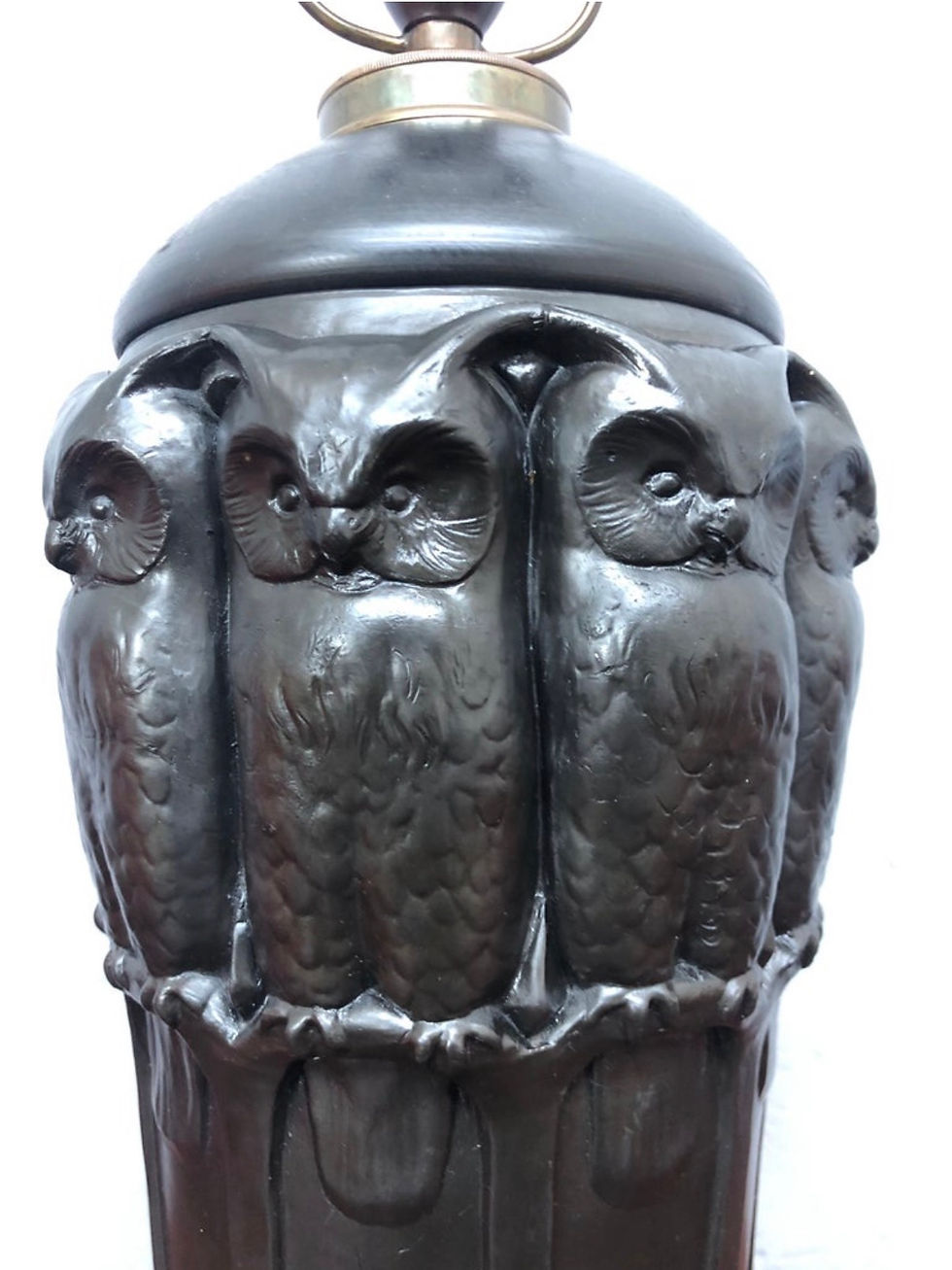
Edvard Frederik Sonne: Active from the 1910s-1940s, Sonne is famous for his black and brown stoneware and sculptural animals. His Broholmer dogs, owls, and bears are now collector’s items. He bridged folk art and studio pottery, making pieces that were both functional and sculptural.
Michael Andersen & Søn: Founded in 1920 in Rønne, this was Bornholm’s first real pottery factory. They hired trained ceramists and brought production to a larger scale, while keeping handcraft at the core. Their blue and green glazes are iconic.
Saxbo: Though based near Copenhagen, Saxbo’s glazes were developed with help from Bornholm potters and clays. The collaboration shows how central the island became to Danish ceramic innovation.

These early workshops set the tone: handcrafted, expressive, often slightly rustic, and deeply connected to nature.
The golden age: 1950s–1970s
After WWII, Bornholm became a magnet for young ceramists trained at the Royal Danish Academy in Copenhagen. They wanted to work with their hands, fire their own kilns, and live closer to the materials.
This era gave us the look most people think of as “Bornholm pottery”:
Thick stoneware with volcanic, crater-like glazes
Muted, earthy palettes inspired by the island’s cliffs and sea
A mix of functional tableware and one-off sculptural pieces
Studios like Bodil Manz, Ole Bjørn, Hjorth’s Fabrik, and Bodil Damgaard put Bornholm on the international map
The island’s isolation helped. Far from Copenhagen’s trends, potters developed their own language. Buyers loved it because it felt authentic, not mass-produced.
What makes Bornholm pottery different today
Bornholm still has over 40 active ceramic workshops. That’s more per capita than anywhere else in Denmark.
Modern potters still use local clay and wood-fired kilns, but you’ll also see a lot of experimentation: porcelain, raku, and minimalist forms alongside the traditional heavy stoneware.
What hasn’t changed is the philosophy. Most Bornholm potters will tell you the same thing: “The island makes you slow down. You can’t rush clay, and you can’t rush fire.” That slowness shows in the work.

How to spot and buy it
Look for:
Marks: Most pieces are stamped with the maker’s initials or full name on the base. Michael Andersen uses “M A S”, Hjorth’s uses “H F”, Sonne often signed “E F Sonne” or “EFS”.
Glazes: Deep blues, olive greens, iron reds, and matt blacks are classic. Many have a slightly uneven, “alive” surface.
Weight: Bornholm stoneware is heavy. If it feels light, it’s probably not from the island.
Where to buy:
Rønne and Gudhjem: The two main towns for galleries and workshops. Most studios have open doors in summer.
Antique shops in Copenhagen: Look for pieces from the 1950s-70s. Prices range from 300 DKK for small bowls to 10,000+ DKK for signed sculptural lamps and vases.
Online: 1stdibs, Etsy, and Danish auction houses like Bruun Rasmussen regularly list Bornholm pieces.

Why it matters now
In an age of fast furniture and mass-produced decor, Bornholm pottery feels radical. Each piece is touched by human hands, fired in a kiln, and shaped by the same wind and sea that have shaped the island for millennia.
It’s not perfect. It’s not supposed to be. The slight wobble in a bowl, the drip in the glaze, the fingerprint on the base — that’s the point. It’s a reminder that objects can have a story beyond the factory.
Thinking of starting a collection?
Start small. A Michael Andersen vase or a Sonne animal figure from the 1920s-40s is a great entry point. Look for pieces with strong glazes and no damage. And if you ever get to Bornholm, visit a workshop. Watching a potter throw on the wheel with the Baltic Sea 200 meters away changes how you see the object forever.


Comments